Blog
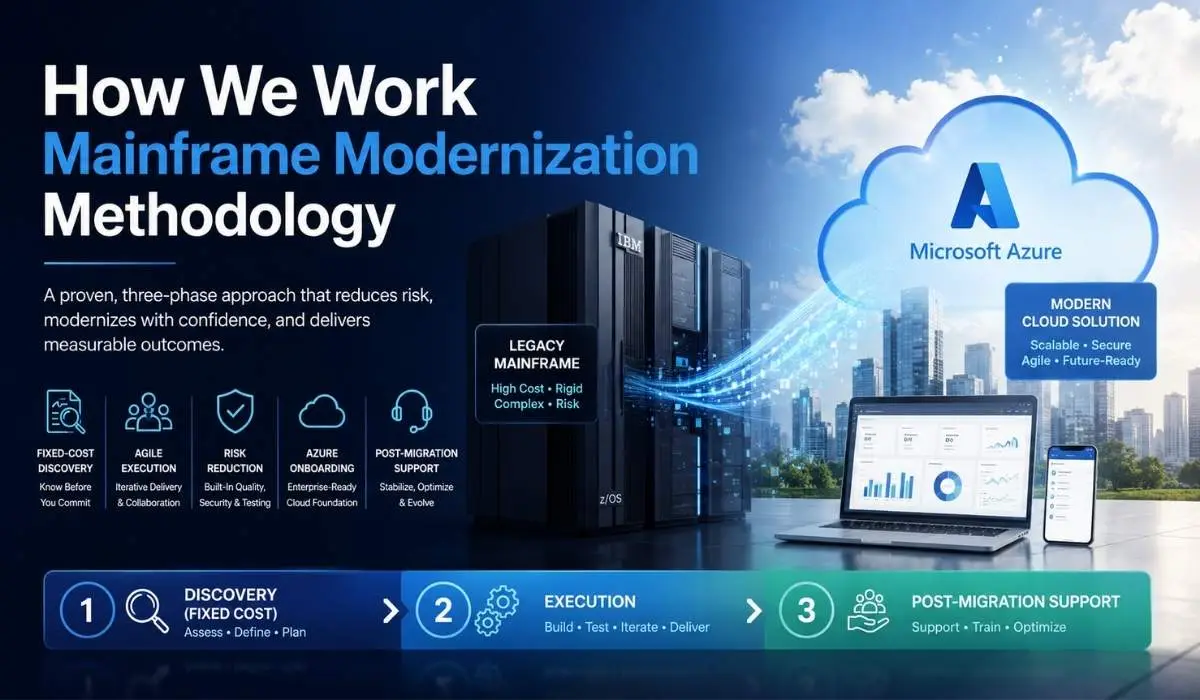
Mainframe modernization succeeds when it's driven by a clear methodology, not just new technology. This guide explains our proven three-phase approach - fixed-cost discovery, agile execution, and structured post-migration support - designed to reduce risk, preserve critical business logic, and deliver predictable outcomes. Whether you're planning COBOL modernization, application modernization, or a full cloud migration, you'll see how disciplined planning, validated requirements, and continuous stakeholder collaboration lead to successful legacy system transformation.
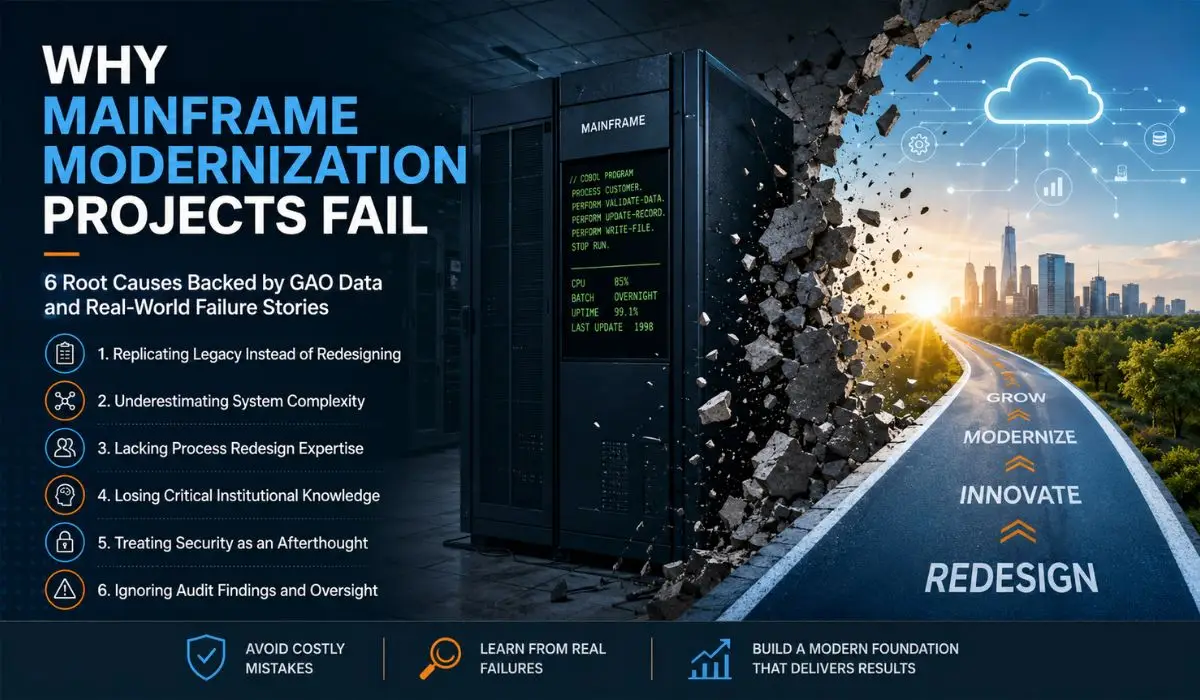
Your COBOL programs hold decades of business rules that only a handful of retiring developers fully understand. AI-powered COBOL analysis scans your programs, JCL, databases, and CICS screens to map out what your mainframe actually does today, then validates those findings with your team before any migration work starts. This post walks through the four-phase process, what to expect during discovery, and how to keep your legacy systems running while you modernize. If your mainframe knowledge is walking out the door with retiring staff, here's how to capture it before it's gone.
If your sales team, warehouse, and finance department are all using different systems that do not talk to each other, your business is losing time and money every single day. ERP integration is the solution - and in 2026, it is more accessible than ever. This complete guide explains what ERP integration is, how ERP inventory management systems work, why ERP and CRM integration matters, and how ERP systems for manufacturing handle the full supply chain. Written in plain English, with real examples, a 6-step process, and 10 FAQs to answer every question you have before getting started.